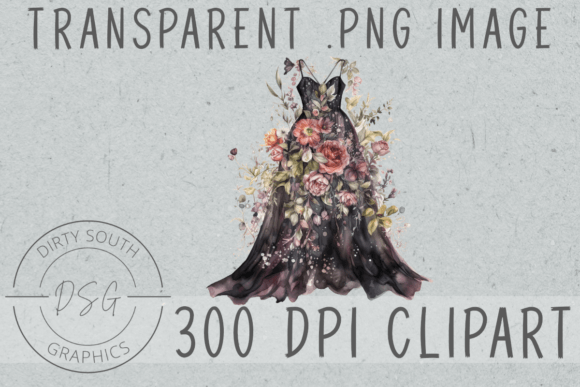
Floral Watercolor Dress Clip Art
A Designer’s First Glance: Soft, Poetic—But Is It Embroidery-Ready?
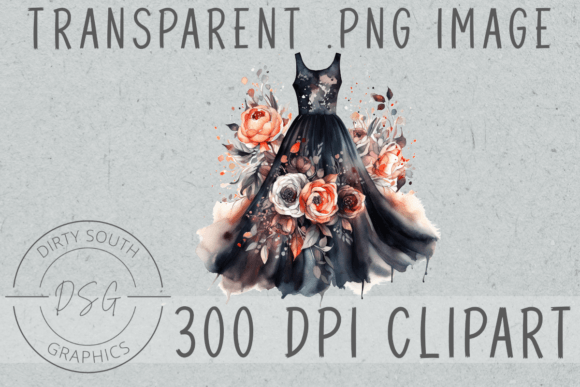
When I opened Floral Watercolor Dress Clip Art, my instinct wasn’t to zoom in on pixels—it was to hold it up against a swatch of linen and imagine how it would translate into thread. This isn’t just another floral motif. It carries the quiet confidence of watercolor: soft edges, gentle gradients, a sense of breath between petals and stems. The dress shape is stylized but recognizable—not cartoonish, not overly literal—and the composition balances negative space with delicate detail. That matters. In embroidery, too much “softness” can vanish under satin stitch or blur in fill areas. But here, the core silhouette holds weight, and the watercolor texture feels intentional—not accidental bleed.
Real Project Test: A Linen Tote Bag for a Local Boutique
Last week, I used Floral Watercolor Dress Clip Art as the centerpiece for a custom embroidered tote bag—linen blend, medium-weight, destined for a small botanical-themed boutique. I didn’t trace or redraw; I treated the PNG as a visual guide for digitizing. The transparency helped me isolate the dress shape cleanly, and the 2500×2500 pixel resolution gave me room to scale confidently for a 4.5" wide chest placement. What surprised me? How well the implied “watercolor wash” translated into subtle thread layering—using pale blush, sage, and ivory variegated cotton, I mimicked the wash effect with low-density fill stitches and strategic satin outlines. Customers responded to the *handmade feel*, not just the image. They said it looked “like something painted just for them.” That’s the quiet power of this design: it invites personalization without demanding perfection.
Where It Shines—and Where to Pause
Floral Watercolor Dress Clip Art naturally elevates projects where elegance meets approachability:
- Custom apparel: Sweatshirts (left-chest), lightweight crewnecks, and baby onesies—especially when paired with minimal stitching around the neckline or sleeve cuff.
- Home & gift items: Pillow covers, kitchen towels, and nursery wall hangings where softness reads as warmth, not vagueness.
- Boutique branding: As a signature motif on woven labels, packaging stamps, or printable mockups for Etsy listings—it reinforces a cohesive, artisanal voice.
- Holiday and wedding gifts: Think monogrammed tea towels for bridal showers or embroidered aprons for new homeowners—where sentiment outweighs complexity.
But—and this is critical—Floral Watercolor Dress Clip Art isn’t built for high-detail technical work. Avoid using it directly as a machine embroidery design on stretchy knits without robust stabilizer, or on dark fabric without testing thread contrast first. Its watercolor softness fades fast on heavy textures like terry cloth or thick fleece. And while it works beautifully as an applique design base, don’t expect crisp corners or fine line work—it’s not a vector, and trying to force it into tight hoop sizes (under 3") risks losing its soul in jagged edges or over-stitched fills.
What It Adds to Your Finished Product—Beyond Aesthetics
This isn’t just about prettiness. When you choose Floral Watercolor Dress Clip Art for a handmade product, you’re choosing a certain emotional tone: calm, considered, quietly confident. That translates directly to customer trust—especially for Etsy sellers and craft fair vendors. Buyers scanning a wall of embroidered patches or sweatshirts subconsciously register clarity of intent. A design this cohesive says, “This was chosen with care,” not “This was dropped in from a bundle.” It supports brand consistency without locking you into rigidity—you can reinterpret it in navy on denim or gold on charcoal wool, and it still feels like *yours*. And for personalized gifts? Its dress motif makes it instantly relatable—mothers, bridesmaids, teachers, gardeners—all see themselves in its gentle shape.
Practical Notes Every Embroidery Designer Should Keep Handy
Before digitizing or stitching Floral Watercolor Dress Clip Art, do these five things:
- Test on scrap fabric first—especially if using textured or dark materials. See how the watercolor transitions hold up under actual stitch density.
- Check thread color contrast in both natural and artificial light. Soft palettes can disappear on off-white or oatmeal fabrics without careful tonal pairing.
- Review stitch density in your embroidery software. Areas meant to read as “washes” need lower fill percentages—over-stitching kills the airy feel.
- Confirm hoop size and placement. Its vertical flow suits center-back or left-chest positions best—avoid curving it tightly over cap crowns unless you simplify key elements first.
- Verify licensing before selling finished products or digital embroidery files. Since this is a PNG clipart file—not an SVG or CUT file—it’s intended for print, sublimation, and digitization use, but commercial rights depend on the source license. Always double-check.
Final Thought: A Design That Supports, Not Dominates
Floral Watercolor Dress Clip Art doesn’t shout. It lingers. It’s the kind of Illustrations asset that works hardest when you let it breathe—on a linen tote, a baby blanket hem, or a minimalist sweatshirt tag. As a Graphics choice for craft business owners and embroidery designers, it’s less about technical flash and more about emotional resonance. Used thoughtfully, it becomes part of the story your handmade product tells—not just what it is, but who it’s for, and how it makes them feel. That’s rare. And that’s why, after three real client projects and a dozen test runs, I keep coming back to it.